
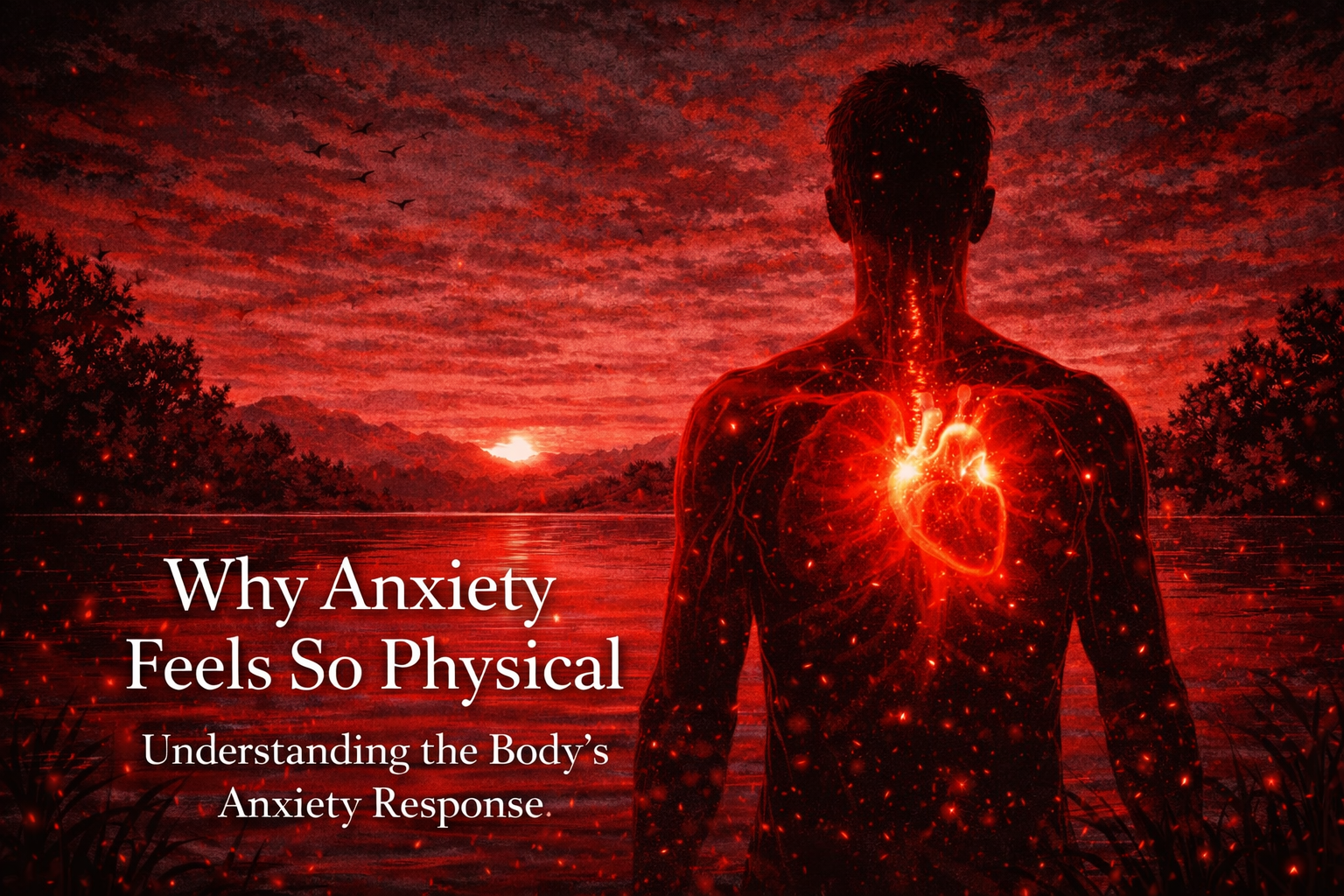
When people think about anxiety, they often imagine it as something that happens only in the mind.
Racing thoughts, worry, overthinking. But for many people, anxiety shows up just as strongly in the body.
A sudden racing heart, tightness in the chest, shaking hands, dizziness, muscle tension.
A feeling of restlessness that seems impossible to sit with.
These sensations can feel alarming, especially when they appear suddenly or without an obvious reason.
Many people who experience physical symptoms of anxiety worry that something is seriously wrong with their health. It can feel confusing when the body reacts so strongly even when there doesn’t appear to be a clear danger.
But these physical sensations are actually part of a very natural biological response.
The human nervous system is designed to protect us.
When the brain believes there may be a threat, it activates something known as the fight-or-flight response. This response prepares the body to react quickly in order to stay safe.
In that moment, several changes happen in the body:
The heart beats faster to pump blood to the muscles.
Breathing becomes quicker to increase oxygen.
Muscles tense to prepare for action.
The body becomes more alert to its surroundings.
Thousands of years ago, this response helped humans survive real physical danger.
If someone encountered a predator or another immediate threat, their body needed to react quickly in order to escape or defend itself.
The problem is that the brain cannot always distinguish between physical danger and emotional stress.
Modern anxiety can trigger the same response.
A stressful thought, an uncertain situation, or even a passing worry can activate the nervous system in the same way a physical threat once did.
When this happens, the body begins reacting as if it needs to prepare for danger.
This is why anxiety can feel so physical.
Your body is responding to signals from the brain that something may not be safe, even if you logically know that everything around you is okay.
Understanding this can be an important step toward reducing the fear surrounding these sensations.
When the body reacts with symptoms like a racing heart or tight chest, it does not necessarily mean something dangerous is happening. Often, it simply means the nervous system has become activated.
The body is trying to protect you.
One helpful approach during these moments is to gently signal to the nervous system that it is safe to relax.
Slow breathing, grounding exercises, and focusing on physical sensations can help calm the body’s alarm system.
For example, some people find it helpful to notice the feeling of their feet on the ground, the rhythm of their breathing, or the texture of something they are holding in their hands.
These small moments of awareness can help guide the nervous system back toward a calmer state.
Over time, learning how the body responds to anxiety can reduce the fear of these sensations.
Instead of feeling like something mysterious or uncontrollable is happening, it becomes easier to recognize that the body is simply responding to signals from the brain.
And just like the mind can learn new ways to respond to stress, the body can also learn to settle and feel safe again.
If you have ever felt confused or frightened by the physical sensations of anxiety, you are not alone.
Your body may sometimes react strongly, but those sensations are part of a system designed to protect you.
With understanding, patience, and support, it is possible to learn how to calm that system and feel more grounded again.
Let this be a reminder:
your body may feel overwhelmed in the moment, but it is trying to protect you.
